The Abbott and Costello project continues with Comin' Round the Mountain (1951), a hillbilly farce which I seem to have seen at a holiday kiddie matinee in Honolulu Hawaii in 1962 or 63 - I could only ever remember one scene from that movie and recognised it in this. It also marks my earliest exposure to the acting talents of Robert Easton. For a cartoonish hillbilly film it is surprisingly good - I had always avoided it when it came on television because of a natural dislike for the hillbilly motif. Lou finds he is heir to the honor and hidden treasure of a hillbilly clan. I was very surprised at how interesting and entertaining I found it despite the novelty stylings of Dorothy Shay the Park Avenue Hillbilly. The boys are stars of their own film, looking a bit distinguished at this point, and carry it off well, with Lou showing a surprise talent for percussion. Lost In Alaska (1952) is another story, and a poor one. As supporting characters to Tom Ewell in a weak aimless treasure plot, their roles could have been taken by any other comedy duo, and should have been. Got quite uninteresting so I skimmed through the second half just to see if they ever did anything characteristic or interesting. They didn't.
Showing posts with label Abbott and Costello. Show all posts
Showing posts with label Abbott and Costello. Show all posts
Monday, September 27, 2010
Movies
The Men Who Stare at Goats (2009) I laughed all the way through this weird witty story about military efforts to develop an army of psychic warriors, and was strangely inspired by the brief documentary interviewing some of the participants in the actual events on which it was based. I appreciated the way the main character's voiceover comments were mostly lame pop culture comparisons, exposing his impoverished mental landscape. I'd watch George Clooney in almost anything, even a Coen Brothers film - he is a master of deadpan comedy, having the ability to say and do the most absurd things with a straight face. This movie was Donna's choice and it was a good one. 8/10


Tuesday, September 14, 2010
Movies
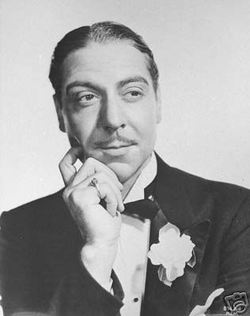
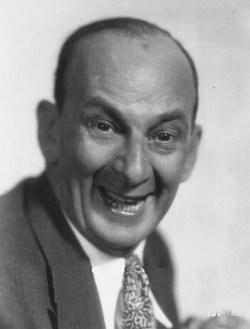
The Noose Hangs High (1948) I had never even heard of this Abbott and Costello movie, produced by Eagle-Lion Pictures. The boys are high altitude window cleaners, naturally, but that pretext is dropped as soon as they get involved with the missing 50Gs gangster Joseph Calleia owes eccentric gambler Leon Errol. This would be a good one to show a person who had never seen an Abbott and Costello movie, as Lou has developed beyond his more obnoxious childlike mannerisms and is genuinely funny, while Bud's badgering and setting him up is sometimes casually malicious. Showcases some of their lesser routines - Mike Mazurki is the foil for I'll Bet You're Not Here, Lou does The Horse's Fodder with Errol, and together the boys go through a meandering version of I Don't Like Mustard. Overall a good, representative film of moderate entertainment value. 6/10

Wednesday, September 1, 2010
Movies
The Abbott and Costello project has slowed because of the sudden appearance of more interesting movies, but here is what I have up to this point: I skipped Hit the Ice (1943) and In Society (1944), remembering them quite well, but of course watched the Bagel Street/Susquehanna Hat routine in In Society, which I consider one of the best vaudeville routines in history - surreal, atrocious and pointlessly destructive, pure hilarity. Likewise I passed on Lost in a Harem, (1944), Here Come the Co-eds and The Naughty Nineties (1945), the latter containing their best-known rendition of Who's On First, which I want never to see again. 1945's In Hollywood is a backlot chaser with surprisingly few guest cameos, considering it was just a wander through various imaginary films-in-progress. It was harmless and unmemorable. Little Giant (1946) I likewise passed up, having seen it quite a few times - I consider it their best work, with a coherent plot that makes good use of their personality traits and keeps them as the stars of the film for once. The Time of Their Lives (1946) is an odd story, with Costello and ingenue Marjorie Reynolds as ghosts from the Revolutionary War cursed to haunt their resting place until proof is found they were not traitors. Abbott is a neurotic pill-popping psychiatrist and the boys do no interacting beyond Lou kicking Bud in the rear once or twice, him being invisible and all. Not too bad a film, but unusual. For 1947, Buck Privates Come Home I passed over, in favor of The Wistful Widow of Wagon Gap, with the boys as traveling salesmen in the old west. Their visit to a lawless town puts Lou in charge of a widow whose husband he supposedly killed, said widow being Marjorie Main who can raise a movie from the dead. Not too remarkable other than that. At this point they seem to have used up all their old routines and are going on personality alone, maybe not such a good idea. When Lou gets going, Bud vanishes from the screen. More to come, eventually.
Sunday, August 22, 2010
Movies
The Abbott & Costello project moves into 1942/3 with Ride 'Em Cowboy, Rio Rita, Pardon My Sarong, Who Dunnit, and It Ain't Hay. After their appearance in pre-war militaristic propaganda, their films after the war began steer as much as possible into pure escapism, with only marginal war topics, such as the Nazi spy ring in in Rio Rita, and an occasional gag referring to Made In Japan, or shortages of such commodities as rubber. Ride 'Em, Rio Rita, and Who Dunnit (a radio show murder mystery) are more versions of the same movie, with A&C doing comedy relief for the central boy/girl plot. The weakness of this concept is that the plot must be carried by people who are not good enough to merit star billing, and it gets so weak at times that I just gave up on Rio Rita halfway through. Pardon My Sarong is a Gilligan's Island story, with the boy/girl crap pushed into the corner and the boys more integrated into the story, and It Ain't Hay is a perfunctory adaptation of a Damon Runyon story in which the boys at last take the primary roles. What I look for in these, other than the comedy routines, is an indication of the social issues of the day. In Ride 'Em Cowboy, the existence of African Americans is suddenly acknowledged, with Ella Fitzgerald's role as Ruby the singing maid, with a couple of musical numbers and prominent placement in many shots. In 1941's In the Navy, we have the disturbing experience of seeing the Andrews Sisters performing "Gimme Some Skin," a boogie-woogie jive number with Patty singing in a stereotypical style about "how they do it in Harlem," with not one actual or potential Harlemite in the crowd, the band, or the entire movie. As Donna said when I described it to her, "We will take your music, make it less interesting, and then pretend you don't exist." Though they must appear only as servants or entertainers, African Americans are at least allowed to exist in Ride 'Em and Rio Rita. Pardon My Sarong has its own weird racial issues, with islanders being represented as a type of white person, and played primarily by whites - when played by blacks they are cannibals and savages. Finally, in It Ain't Hay, the musical portion is pushed to the end of the movie with a short revue featuring the Four Step Brothers in zoot suits - not chef's hats and waiter's coats for once. I attribute the changing racial representation to war issues - both as an attempt to appeal to an audience which began to gain some degree of power and money through military service and increasing wartime industry, and, out of fear, to placate an abused minority which was being appealed to via racialist propaganda as a tool to weaken US power.

Mary Wickes in Who Dunnit - MURDER?!?!?

Wednesday, August 18, 2010
Movies
This Abbott and Costello thing is already turning out to be much harder work than the Norman Wisdom and Morecambe & Wise projects. In Hold That Ghost they come into possession of an Old Dark House with a gangster's fortune hidden in it. The Andrews Sisters and Ted Lewis appear at the beginning and end of the film, with no connection to the story. Lewis's archaic music-hall schtick is hard to get. Joan Davis as Lou's girl-foil really peps things up. I had seen Buck Privates enough times so I skipped it, but endured the rest of the trilogy, In the Navy and Keep 'em Flying. These films are factory-made variety revues, a boy meets girl formula with songs. A&C are reduced to comedy relief in their own films, which are intense militaristic propaganda. Large production numbers portray military life as joyful and heroic. High budget, but not very good as movies. Navy was more enjoyable thanks to a couple of good money-counting bits, and the bizarre Hawaiian Style number by the Andrewses - bongo belts, fringe blouses and Hawaiian Chant, boogie woogie style. Flying was not, to my mind, improved by Martha Raye as twins.

Patty Andrews hamming it up in a Bongo Belt

Monday, August 16, 2010
Movies
One Night in the Tropics (1940) Idiotic "Love Insurance" farce, with forgettable Jerome Kern songs and Abbott and Costello crudely shoe-horned in. Expensive sets look so fresh and unrealistic you can almost smell the paint; there may not be lighting fixtures but there is always plenty of elaborate illumination with decorative shadows but nothing casting them, and everything else is equally convincing. If you can put yourself into that sort of total fantasy mindset it may be watchable but for me it was a real chore to sit through, especially as I have always found the protagonists, Robert Cummings and Allan Jones, rather hard to take. Mary Bolland as the love interest's numerologist aunt is the best character - even William Frawley is kind of lousy. This is Abbott and Costello's first feature film appearance, a simple cash-in on their radio popularity. I am watching their films looking for lesser-known routines and this has some good ones, which I will call Two Tens for a Five, A Dollar a Day For a Year, and I Don't Like Mustard. And it isn't even one night either because they are in the tropics for days and days. 4/10
Subscribe to:
Posts (Atom)