Showing posts with label musicals. Show all posts

Wednesday, March 28, 2012

THAT'S HEAVEN TO ME


This excerpt from the "I Want to be Bad" number in the 1930 technicolor musical Follow Thru is an accurate depiction of what I hope heaven will be like.  It's not a great movie but it introduced the perennial "Button Up Your Overcoat" to the wider public, and it features the following disturbing scene of Eugene Pallette in drag:

Friday, October 14, 2011

MOVIES

The Phantom President (1932) In the first of his two sound picture appearances, George M. Cohan plays a dual role as a stuffed-shirt banker with presidential aspirations and the coincidentally identical stranger, a medicine show mountebank with the pep and personality needed to pull off a successful campaign.  Claudette Colbert is another of the dead stick banker's aspirations which is also taken over by his double - despite the obvious decades of age difference.  Jimmy Durante is the double's eccentric gibberish-spouting factotum and they perform a couple of  Rodgers and Hart numbers together with excellent chemistry.  There are few opportunities nowadays for us to ascertain what Cohan's appeal was, but his charisma and personality are obvious and his blackface performance lacks the smarmy emotionalism of Jolson's and doesn't even go into dialect.  There is some effective political satire here, showing that the only way to win the presidency is to put on an entertaining spectacle.  I was also impressed with the sophisticated direction and camerawork, with the double scenes handled very effectively.  It's all pretty weird, but entertaining, and Colbert is well-dressed in sleek satin with huge puffy feather collars or fur sleeves.  Worth seeing for historical value, 7/10

Wednesday, August 31, 2011

Movies - Frances Langford again

 I had bookmarked Girl Rush (1944) a while ago because it stars the obscure comedy duo of  Wally Brown and Alan Carney, but when I realized it also features Frances Langford I decided I'd better download it and get it watched.  Well, it's pretty terrible, combining a mediocre Gay Nineties music hall story with a flat RKO western and the Brown-Carney duo seems to me to be justly forgotten.

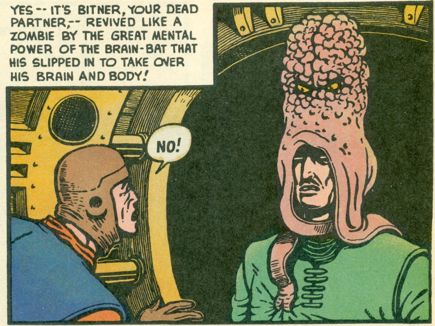
 Langford's hair is again an enormous superstructure some five or six inches high, perched atop her head like a Venusian Brain Bat but with sausage curls added in the back for that Gay Nineties look. To be fair, most of the girls in the movie have the same sort of hairstyle but hers is far and away the most huge and imposing. The movie is mercifully short, and other than feeding my temporary Langfordmania its only really notable moment is during the scene we see below - Robert Mitchum in drag.


As I was sitting in the sauna at the health club today, pondering the mystery of Frances Langford's immense hairdo, I recalled this scene from Dixie Jamboree, where she takes the wheel of the riverboat in a cartoonishly enormous captain's hat.  It was then that I figured it all out.
  In the 1920s and 1930s, it was cute to be little.  There was nothing more charming than a chest-high jazz-baby gazing up at her big strong man and a sweet little gold-digger like Joan Blondell could wrap any man around her little finger just by acting helpless.  In the '40s small women were not hep.  It wasn't cute any more to be little except in a juvenile role or as comedy relief, probably because the war effort demanded more of women and they were, temporarily at least, taking on a more autonomous and self-determining role in society.  Frances Langford was five feet one inch tall. Like the even more diminutive Carmen Miranda she was tricked out in high heels and big hats, and her colossal coiffure, to make her more acceptably large.  It really is a terribly unflattering style for her, and I find her much more human looking (and her vocal style more interesting) in this clip from the 1930s.

Movies - or more properly Hair

Dixie Jamboree (1942) is a bit substandard even for poverty row's Producer's Releasing Corporation (PRC), a Mississippi showboat story with Guy Kibbee as the captain, Lyle Talbot the heavy, and lightweight Eddie Quillen as the closest thing to a romantic lead they could come up with. The real interest in this for me is Frances Langford, or more exactly, the thing on her head. This review is not so much of this half-assed movie, but of a hair style.

That's Eddie Quillen, warily eyeing the immobile hair sculpture, or at least the tiny face buried within it. I recently reviewed the Eleanor Powell/Jimmy Stewart film Born to Dance in which Langford does not stand out at all because her head is not crowned by a gigantic immobile hair sculpture like this. She had a pretty good voice, and seems to have done well opposite Don Ameche in the Bickersons radio program, but as a screen actress she leaves much to be desired. Such as personality. Her lack of personality is more obvious when she is ostensibly the star of the film, and when she has a gigantic immobile hair structure perched upon her head, making her small round face seem even tinier and less appealing.

Here she is in Career Girl, another PRC cheapie made around the same time (greatly enhanced by the participation of Iris Adrian - really the only reason to watch it), with her hair sculpture even more gigantic and frightening. 1944 was not a good time for hair, or design in general. There was a trend in set design for musical films to create huge empty apartments or night-clubs dominated by one large baroque motif, isolated and enlarged like a piece chipped off an old picture frame and expanded a thousand times, and this sort of paralyzed upswept head encrustation appears to spring from the same puzzling source. Betty Grable's lack of appeal for me I attribute to her participation in this unappealing trend which makes a round face rounder and a blank face blanker. Her 1945 film The Dolly Sisters is a relentless assault of these frozen squiggly head sculptures, each one more freakish and unnatural than the last. They have the same visual impact on me as a baroque settee with tufted satin upholstery - too much detail creating a kind of nausea, see-sickness as it were. I am still forming theories on the sociocultural basis of this late-wartime design trend but at present it baffles and sickens me.

Thursday, August 18, 2011

Movies

Words and Music (1949) is, as they say, inspired by the lives of the composing team of Rodgers and Hart. Composer bio-fics are a good chance to see some swell musical numbers if you are willing to sit through a lot of faked up melodrama, but in this case they thoughtfully kept the wait between songs a lot shorter than, for example, the Kern (Til the Clouds Roll By) and Ruby/Kalmar (Three Little Words) films. There isn't a lot of excitement in two guys standing by a piano, and in the case of Lorenz Hart there was a lot of material they couldn't use - they had to invent a doomed youthful romance to explain why he lived with his mother and vanished on mysterious long-term binges of some sort. By the time it drags down to his ignominious and forcedly melodramatic end, it is more absurd than pathetic, and they made the final moment of his life purely laughable. Being played by Mickey Rooney doesn't help to take him seriously. A real shame. They dumped a truckload of money on each of the huge soundstage sets (there must be less than two minutes of the film shot outdoors) and it is nice to see a film made at the pinnacle of studio technicolor excess. They did their best to prove their claim that it was the BIGGEST musical. I completely enjoyed only about a third of the songs - the big stage productions were great and Garland's two songs are brightly delivered but ones I don't care for that much. For my money the best number is Betty Garrett's intimate rendition of A Small Hotel early in the film. Perry Como is the primary male singer here, unfortunately. I have always found his voice too blurred and mushy for my liking. Gene Kelly and Vera Ellen do a Slaughter on Tenth Avenue number that seemed way too familiar - possibly he did it or something very similar a couple of other times. I think the biggest challenge they had in the entire picture was making Janet Leigh look like an adult at the end. They did this by having her wear her hair up and dressing her in brown for the last third of the film. It didn't work. She looks 21 when she is supposed to be 18, and 18 when she is supposed to be 30+. Gowns by Helen Rose are a big plus - nobody ever did skirts the way she did, and here her focus is on multicolor layers of petticoats that push the skirt out into a swinging, swirling torrent and flash an intense contrast to the surface color, with a transparent veiling layer over a sharply delineated bustier type of thing above. I had never paid much attention to Rodgers and Hart because I attached the schlockiness of Rodgers and Hammerstein retroactively, but Hart's lyrics are every bit as snappy, playful and inventive as Gershwin or Porter, and Rodgers' melodies are more complex and sophisticated than I expected. Overall not a huge success for me, but it has its moments, mostly in the first half. 6/10

Friday, August 12, 2011

Movies

I got a set of mostly pre-war Bing Crosby movies from the library and bailed out of Waikiki Wedding (1937) in the middle of his first rendition of Blue Hawaii. I just couldn't take all that phony hawaiianity (and Martha Rae), even with Grady Sutton as occasional relief. In Double or Nothing (1937), Bing, Bill Frawley, Martha Rae and Andy Devine are honest strangers brought into an Eccentric Will to compete against the machinations of greedy relatives and win the million dollar inheritance. Rae is invariably repellent to me - if she would keep her mouth shut and take her clothes off more often she wouldn't be so bad. Bing's aggressive pursuit of a young woman is supposed to be cute I guess but I found it rather disgusting. The real interest in this for me was a series of bizarre vaudeville specialty acts ranging from hand shadows to knockabout dancers, and a spectacularly literal deus ex machina finale. 5/10

Goodbye Love (1933) is a short bill-filler in which Charlie Ruggles is a rich man's valet who masquerades as a wealthy big game hunter while his employer languishes in Alimony Jail, a sort of men's club where victims of the alimony scam bemoan the loss of their happy homes to unscrupulous gold-diggers. Since alimony is just a con game villainous women use to rob decent men, it is okay to plot a stock swindle and crash the market to get out of paying it. Of interest mostly for this skewed world view - there is not much depth to any of it and the marcelled vamps are rather frightening. Hattie McDaniel appears. Better than not watching a movie. 5/10

Thursday, August 11, 2011

Movies

Lady Be Good (1941) stars Ann Sothern and Robert Young as a songwriting team with an off again on again marriage, providing an excuse for some excellent Gershwin brothers tunes to be played a bit too much. I grew up with Young on Father Knows Best but never cared much for him in serious roles - here he is just right as the knucklehead whose idiocy keeps estranging his longsuffering wife. I have been listening to Sothern's radio shows The Adventures of Maisie, and have seen the first of her Maisie series of films so am glad to see her as a different character. I would like to see her in something really serious to see how she handles it. (Note - on My Mother the Car, she played the car. It seems I have seen her in A Letter to Three Wives but that was quite a while ago and I don't remember a thing about it.) This is probably one of the last movies to feature divorce in such a light story as the soon-to-arrive war made marriage hideously sacred for the following twenty years. Busby Berkeley was intended to direct this but was retained only for the outstanding musical numbers - the extended Fascinating Rhythm number at the end is less elaborate than his earlier work but is as precise and dynamic as anything he ever did. There is a great musical montage with growing stacks of records, and sheet music flashing across store counters, and Sothern's rendition of The Last Time I Saw Paris, though it doesn't really fit into the story, is restrained and quite moving. The real mystery is how Eleanor Powell came to be top-billed on this in all the credits and publicity material. She is never anything but the Cheerful Chum (I just coined that the other day - pretty good, huh?) who connives to get the two actual leads back together and only appears in one major scene through the first 2/3 of the film. The good thing is that her two dance numbers, one spare and tight in an apartment - with a highly talented dancing dog! - and the other the socko Fascinating Rhythm number (along with the Berry brothers, a black tap trio not as flashy and sharp as the Nicholas brothers but with loads of pep) have all the dynamic qualities lacking in Born To Dance. The routines are exactly fitted in timing and dynamics to the music and are extremely impressive every moment, truly deserving of her reputation. She is very exciting to see, and really burns up the floor. It is a very good thing that she is kept a chirpy secondary character in an Iris Adrian/Una Merkel role and brought to the fore only to dance. The story itself is not super great and as I noted before some of the songs are overplayed but the production numbers are for the most part real killers and very much worth seeing. Red Skelton and novelty songstress Virginia O'Brien are shoehorned in for entertainment value, he mercifully brief but she sadly so. Comes in a two disc "Eleanor Powell" set with Born to Dance. 7/10

Wednesday, August 10, 2011

Movies

I am starting to miss having the opportunity to display my erudition on obscure cinematic topics so I will try to review a few more movies occasionally, starting with Born to Dance (1936). Eleanor Powell and Jimmy Stewart are the wide-eyed grinning boy and girl in this film which is most notable for its weaknesses. The songs by Cole Porter include the standards Easy To Love and I've Got You Under My Skin, and some pretty good show tunes such as Rap Tap On Wood (the best number in the film) and Hey Babe Hey, but the story is weak and hackneyed, and the presentation is a series of set-pieces. At times it seems as if much of the story elements were cut out, as singer Frances Langford is arbitrarily paired with Buddy Ebsen without having her character really introduced, and Virginia Bruce as the Other Woman/Temperamental Star who has to be put out of the way for the sake of Powell's success and happiness never develops her character at all - she abruptly goes from fairly likeable to a complete monster just because the plot requires it. A few of the numbers are well-choreographed but mostly they don't seem to hold together or, like Powell and Stewart's sweet duet of Easy To Love which is brought to a halt by an irrelevant novelty bit by a walk-on character, are flawed or ill-constructed. Virginia Bruce's treatment of Under My Skin is aloof and unconvincing, with a few of the lines delivered with back to Stewart and the camera, not like a woman barely able to keep from crawling all over him as the song suggests. Ebsen is sometimes fun to see but here is kind of squinty and repulsive, and of all the secondary characters only Una Merkel as the Cheerful Chum is consistently appealing. Jimmy Stewart shows he is as good a singer as Powell is an actress - they must have been trying him out as an all-around leading man but they should have had someone dub his songs as they did Powell's since his voice is as weak and reedy as you might expect. She is an outstanding dancer when she gets the chance and some of her work here is remarkable, but the choreography is flat and archaic without much real connection between the action and the music, and the director seems unaware of the Berkeleyan technique of inserting a shot of other performers to disguise a break in the routine. Though it seems a bit advanced over other musicals of that period, mostly because of the high quality music and big, bright, open sets, it is a jumpy and poorly contrived movie overall. Director Roy Del Ruth has a lot of better movies to his credit and I imagine that many of the failings of this one came out of the front office and the editing room, not the soundstage. 5/10

Her most startling move.


Recently I also saw Hollywood Cavalcade (1939), a lush technicolor melodrama inspired by the early days of Hollywood and specifically the miscued non-romance of Mack Sennett and Mabel Normand. Don Ameche had to play some real boobs at times, and this is one of his boobiest - he's the jerk so obsessed with making movies that he doesn't see Alice Faye flinging herself at his feet every damn day. Sadly, there are no songs, but it is pretty entertaining with a few cameos by silent stars and an amusing pie-flinging sequence with Buster Keaton. It's Hollywood's love song to itself and as such is cloying and contrived, but it was brightly colored and well-made. 6/10

This is what I liked best.

Monday, February 7, 2011

Movies

The Man and the Monster (1958) In this Mexican-made monster story, a man sells his soul to Satan to become the world's greatest pianist. The catch is, every time he plays the piano he transforms into a stupid looking lump-nosed monster like a fuzzy-faced were-pig. This shows how devious Satan really is, because being a cool looking monster wouldn't be so bad, but being both horrible looking and stupid looking at the same time is a real curse, believe me, because I know. It's a flat, formulaic story but what is apparent from the very first scene is that this movie is beautifully made, with artistically composed deep-focus scenes lit in intense expressionistic chiaroscuro. It's one of the most visually appealing movies I have seen in quite a while and my eyes were very very happy to be watching it. Story 3/10, execution, 8/10.


Miss London Ltd. (1943) is a very rare thing - a British musical comedy. There are lots of great British comedies with songs added, but this is a unified production in the American style with songs integrated into the action and dialog, imaginatively staged. It stars Arthur Askey and American singer and comic actress Evelyn Dall, with musical support from Anne Shelton, another outstanding performer. Who cares what the story is, it's sharply written, fast and funny with lots of good songs and dancing. See or download it here - it's worth it. 8/10

Wednesday, January 12, 2011

Movies

Sextette (1978) Mae West crawled out of her grave for this unmusical musical unfunny comedy. I swear I thought my face was going to freeze forever in a grimace of painful horror from seeing that scary old grandma hobbling around, croaking vile lewd one-liners. The songs were uniformly as deranged and ghastly as the very worst songs in Sgt. Pepper's Lonely Heart's Club Band, which is as bad as a cover of a song in a movie can possibly be. It was absolutely nightmarish and agonizing. It's not as bad as the Village People movie Can't Stop the Music, but that is the ONLY MOVIE EVER MADE that it is not as bad as. Rating: NEGATIVE INFINITY MINUS ONE. That's just one short of negative infinity, and the second worst rating any movie could ever have.

On the other hand:
I had read the first volume of the Scott Pilgrim vs. the World (2010) comics a couple of years ago and the only difference I could see between it and all the other dozens and dozens of independent comics I have read about the relationship problems of an unemployed hipgeek in a rock band was that it was cartoony fiction instead of painful and embarrassing autobiography like all the rest. So when this movie came out I just ignored it. However, this is the month I am trying to get caught up on some of last year's more interesting seeming movies and I was completely unprepared for how extremely witty, inventive, well-written and well-made this was. Jam-packed with imaginative gimmickry, sharp dialogue, sweet cute romance and hugely farcical action, it is only the somewhat excessive and tiring final spectacle which keeps me from giving it a 10. But it is the kind of movie that makes you feel cool just to be watching it, so it's 9/10.

Wednesday, January 5, 2011

Movies

Cracked Nuts (1931) Comedy duo Wheeler and Woolsey are competing to be king of a generic comedy kingdom of that era, and perform what is essentially a series of standup routines and burlesque sketches with various straightmen and women. With Edna May Oliver as the obstacle to Bert Wheeler's marital bliss, and Boris Karloff as a shiny-haired schemer. One routine involving mapping out a battle plan includes an early fragment of Who's On First, with a town named What. Q: What's the name of the town? A: That's right! As a scholar of the history of comedy I found this enjoyable. 5/10

Palmy Days (1931) A slightly more sophisticated musical comedy starring Eddie Cantor as a lucky fool who falls into a high-paying job as an efficiency expert in an ultramodern bakery staffed by hundreds of lovely young women in backless minidresses or backlit transparent skirts. Their daily fitness routines are choreographed by Busby Berkeley. Charles Middleton, remembered as Flash Gordon's nemesis Emperor Ming, is a phony psychic after the company bonus money, and George Raft is one of his henchmen. Silly entertainment. 6/10

Paradise.

Wednesday, December 29, 2010

Movies

It's a good thing I make notes on my desk blotter or I would forget all this holiday indulgence:

Son of Ali Baba (1952) Tony Curtis is browned up for a glamor-boy turn in this cheesy costume potboiler. They couldn't drive an extra half hour to shoot the horse chase scenes in the desert, so this Bagdad is nestled amid rolling hills clad in sagebrush and scrub pine. Colorful filler, more fun than a bible movie. 3/10

Les Belles (1961) "Qian jiao bai mei" is the vernacular title of this Hong Kong romantic musical comedy from Shaw studios, focusing on the lives and loves of members of a modern dance troupe. It is notable mainly for the fact that it is presented in a very western style, with little distinctively Chinese culture intruding beyond a couple of historically themed dance numbers. I have become accustomed to the Hollywood treatment of the latin theme but it is jarring to see a latin dance number done with Chinese tonalities. It's clear they had little experience in staging western style dance numbers, which strive for exoticism but are rather flat and dull. Very brightly illuminated and colorful, with some peppy songs and bizarre dance settings, but rather long at two hours. Of interest mostly as an oddity and for cultural comparison. 5/10

Spiderweb number - in ShawScope. It's wide.

Sunset Murder Case (1938) Burlesque dancer Sally Rand stars in this poverty row B pic, and her bubble dance was the reason I watched it. It's pretty mild until the last moment, when she briefly, and heavily backlit, drops her filmy wrap to show her form. A fan dance number was apparently too revealing, so it's concealed behind palm frond silhouettes inserted over the frame, making me wonder if there might have been a "special" version of the film which lacked them. Otherwise it's another brief gunshots and gangsters story. 4/10

The famous Bubble Dance

Yes Sir, Mister Bones (1951) Hour-long cheapie about a retirement home where old Minstrels lurk, waiting for someone to come along and ask them what a "minstrel show" was. Does a fair job of conveying the spirit of the artform, if not the letter - the music is pretty swingified - with a couple of remarkable turns from Scatman Cruthers, some nostalgic Negro Spirituals, and some grating blackface "comedy." The black performers are uniformly superior, the blackfaces pretty hard to take. It does show the omnibus nature of the minstrel show, providing all varieties of entertainment in one grand spectacle, but a more realistic flavor can be gotten from 1952's Stephen Foster faux biopic I Dream of Jeanie, or Shirley Temple's 1936 film Dimples. Directed by Ron Ormond, and it's not the weirdest thing he did, not by a long shot. 5/10

Side note - Ron Ormond is perhaps least known for this contribution to popular culture - the line "christianity is stupid," from his christian commie-scare film If Footmen Tire You, What Will Horses Do, which was put to use by Negativland.

The Hayseeds (1933) An Australian romantic musical comedy, as it proudly proclaims on the title card, and it makes quite a thing out of being Australian too, with monologizing on the Australian national character, and random insertion of wildlife footage. The romantic duet spends as much time showing the Sydney harbor bridge as the young lovers. This is the first film appearance of South African born Cecil Kellaway, who later found quite a bit of work in Hollywood. The quaint, countrified Hayseeds spend some time chasing trollleys in the bustling streets of Sydney, which looks as vast and towering as Chicago. The plot and songs are adequate, and this is an interesting novelty that doesn't tire you overmuch. 5/10

Forbidden (1953) An adequate exotic noir, placing Tony Curtis in a backlot Macau intrigue. Joanne Dru is the adequately angular and immaculate woman with a history. The story is convoluted without being indecipherable, the dialog is full of mild congenial phrases forced through gritted teeth, and it comes to an adequately active climax. The primary song in this universe is You Belong to Me (See the pyramids along the Nile etc.) and I suppose this is the film that made it popular - it's still rotating through my head today. It all looks good and stays interesting, but there is a wee bit too much standing around talking, and jumping into cars and dashing off somewhere for me to say it was great. Pretty good though. 7/10

I also watched quite a bit of Toomorrow (1970) - it seems the masterminds behind The Monkees wanted to do it again, this time with a movie in England. Extraterrestrial observers find that a pop band featuring Olivia Newton John is the only source for the healing vibrations they crave. Aimed at an older audience, with art-school protests and sit-ins a major plot element, it is peculiar without being interesting.

Japanese release. Also very wide.

Thursday, December 23, 2010

Movies

Pepe (1960) An American-made Cantinflas movie. Even though they tried to make it a bloated monstrosity by jamming in cameos and performances by everyone they could get their hands on, it still comes out pretty well with his usual blend of comedy and pathos. All the powers of Hollywood could not conquer his natural magnetism and charm. If you can't find a real Cantinflas movie, this one is good enough. 6/10

Monday, December 13, 2010

Movies

Endhiran the Robot (2010) Indian scifi action musical romantic comedy in which I Robot becomes a Matrix of Terminators. He can cook, dance, beat up a whole gang of thugs, help you cheat on your exams, talk to mosquitos, and fall in love with his creator's girlfriend, and is transformed by the Bad Guy into the insane dictator of an army of his replicas. Fantastically colorful and elaborate musical numbers, including one filmed at Machu Picchu. Not some digital greenscreen Machu Picchu - they actually filmed it there. One minute they're laughing on the beach and the next they are dancing and singing in the Andes with dozens of dancers in pseudo-inca garb. Indian movies are intended to be fun and make you feel good. There were some really imaginative sequences throughout, and it was entertaining as it could possibly be. I like fun. I like seeing a giant robot made of robots give a "thumbs up" where the thumb is a robot giving a "thumbs up." For over 2 1/2 hours of pure crazy stupid fun, 10/10

Look! A giant snake made of robots, biting a helicopter!

Friday, December 3, 2010

Movies

El espejo de la bruja (The Witch's Mirror) 1962 - This Mexican horror fantasy starts off as a tale of Supernatural Vengeance, with a devil-worshipping housekeeper punishing the master of the house for his wife's murder, but it veers off into corpse-stealing and grave-robbing, and transplantation of faces and hands from corpses after the new wife is horribly burned. Includes the unique concept of transplantation of ghost hands, which are not under the control of their unknowing new owner. Jaw-droppingly and imaginatively grotesque without being gory, this is the craziest, most satisfying horror fantasy I can recall seeing in years. Most of these things pretty much take one topic and run it through a full cycle, but this throws in everything they could think of, transformations, apparitions, vengeful spectre rising from the grave and stepping through the mirror, right up to the crawling hand stabbing people with a big pair of scissors. Would make a great double feature with the Japanese film Ghosts of Kasane Swamp. 10/10

Roman Scandals (1933) Eddie Cantor dreams of ancient Rome. I haven't seen much of him and am still trying to figure out what the basis of his popularity is. He's got a good voice and an interesting delivery of comic comments and retorts, and the movie is entertaining with a couple of good songs and a few good laughs. My main reason for seeing this, though, is my acquisition of a Busby Berkeley book, so I have a complete illustrated list of his work at hand. The production numbers in this one are not gigantic mind-blowing spectacles so it is perhaps easier to see what they are made of. It's not just film of people dancing - it's the use of the camera in motion and at unique angles, and the intercutting of close-ups of hands, feet and faces accentuating the action which make these so fun. Sometimes people aren't dancing at all - the set and camera do the work. The slave market fantasy, with tragic song by Ruth Etting, is spicy and kinky with scantily clad maidens dancing, chained and whipped. The baths number with the catchy tune Keep Young and Beautiful makes use of black and white contrast, with Cantor blacked up, and interplay between beautiful blonde bathers in white and beautiful black servants mirroring and complementing each other. Moderately entertaining overall, with an extended chariot race if you are a quadriga fan. 7/10

Wednesday, November 17, 2010

Movies

Disney High School Musical China (2010) I liked High School Musical a lot because it is a pure, non-ironic reversion to the basics of the artform. I liked this even more because it takes that and puts it into a different culture, reflecting a different set of mores and ideals. It is blindingly colorful, intensely choreographed, with a harder rocking beat and less (or at least different) melodramatic formula. I was soothed into a state of vegetable delight. I suppose there is no way to see it legally in the U.S. and it seems to be actively suppressed online. As a lover of the artform, I found this to be the best modern musical I have seen since the original. 10/10

Match Factory Girl (1990) Finnish film, directed by Kaurismaaki, in which a young woman's every attempt to find a little happiness in life is mercilessly crushed. Not as much of a downer as it sounds though, as Kaurismaaki's films, however bleak and sparse, always leave a strange feeling of calm satisfaction. His aesthetics and ideals seem to match mine precisely - I never say "I didn't like that part," or "I wouldn't have done it that way," and he obviously loves machines and industrial spaces as I do. There is no filler, and every shot is a beautiful composition, no matter what is happening. His influence on the modern Quirky Independent Film is obvious, just as obvious as the fact that they are trying to do what he does and not succeeding. The characters sit silent and immobile in a state of perpetual discomfort with life, but they are thinking and feeling beings with human souls, not goofy cartoon characters being weird for weirdness' sake. Probably only about a hundred words are spoken in this too-short, hour-long film and it makes me long for that imaginary Finland, where people aren't always yapping at you or each other or themselves. This was Donna's viewing choice for the evening. 10/10

Mark of the Vampire (1935) A deliberate cartoonish mockery of a vampire movie, with Barrymore as the vampire expert, Atwill as the angry policeman, Donald Meek as the local doctor, and you know who as The Count. An incoherent script makes it seem as if production was halted before they were through shooting everything and they just stuck together what they had. There are a few effective, but almost laughably stereotypical, scenes and sequences, but it's not sure if it wants to be a satire or not. Leila Bennett does the same comedy-relief maid she did in Doctor X, though she is not given as much to do here, and Carroll Borland carves in stone the Vampire Woman cliches for all time to come. If you are really into vampires, see it. As a movie it kind of stinks. 4/10

Thursday, September 2, 2010

Movies

Einbrecher [Burglars] (1930) German "musical comedy of marriage." Elderly manufacturer of music boxes and automatons seeks new husband for his too-young wife, but the only contender seems to be a bemonacled little fop. Not quite Lubitsch, but fairly entertaining and bright, with spontaneous songs, a lively dance number, and a startling night club scene which IMDb says features Sidney Bechet and his band in the Palmengarten bar of Berlin's "Haus Vaterland." Lilian Harvey as the wife is a bit sharp-featured at times but quite a sight with her big fluffy hair, in snugly tailored tops and flowing layered skirts. Of high socio-historic interest, and moderate entertainment value. 6/10

My Learned Friend (1943) Somehow I forgot to list this last week. Action farce with British comics Will Hay and Claude Hulbert as failed lawyers (a con man and a ninny, respectively) attempting to prevent a vengeful ex-con from knocking off one by one the folks who put him in gaol, with Hay's character the final name on the list. A cut above the US factory-made equivalent of the day. 7/10

Sunday, August 22, 2010

Movies

The Abbott & Costello project moves into 1942/3 with Ride 'Em Cowboy, Rio Rita, Pardon My Sarong, Who Dunnit, and It Ain't Hay. After their appearance in pre-war militaristic propaganda, their films after the war began steer as much as possible into pure escapism, with only marginal war topics, such as the Nazi spy ring in in Rio Rita, and an occasional gag referring to Made In Japan, or shortages of such commodities as rubber. Ride 'Em, Rio Rita, and Who Dunnit (a radio show murder mystery) are more versions of the same movie, with A&C doing comedy relief for the central boy/girl plot. The weakness of this concept is that the plot must be carried by people who are not good enough to merit star billing, and it gets so weak at times that I just gave up on Rio Rita halfway through. Pardon My Sarong is a Gilligan's Island story, with the boy/girl crap pushed into the corner and the boys more integrated into the story, and It Ain't Hay is a perfunctory adaptation of a Damon Runyon story in which the boys at last take the primary roles. What I look for in these, other than the comedy routines, is an indication of the social issues of the day. In Ride 'Em Cowboy, the existence of African Americans is suddenly acknowledged, with Ella Fitzgerald's role as Ruby the singing maid, with a couple of musical numbers and prominent placement in many shots. In 1941's In the Navy, we have the disturbing experience of seeing the Andrews Sisters performing "Gimme Some Skin," a boogie-woogie jive number with Patty singing in a stereotypical style about "how they do it in Harlem," with not one actual or potential Harlemite in the crowd, the band, or the entire movie. As Donna said when I described it to her, "We will take your music, make it less interesting, and then pretend you don't exist." Though they must appear only as servants or entertainers, African Americans are at least allowed to exist in Ride 'Em and Rio Rita. Pardon My Sarong has its own weird racial issues, with islanders being represented as a type of white person, and played primarily by whites - when played by blacks they are cannibals and savages. Finally, in It Ain't Hay, the musical portion is pushed to the end of the movie with a short revue featuring the Four Step Brothers in zoot suits - not chef's hats and waiter's coats for once. I attribute the changing racial representation to war issues - both as an attempt to appeal to an audience which began to gain some degree of power and money through military service and increasing wartime industry, and, out of fear, to placate an abused minority which was being appealed to via racialist propaganda as a tool to weaken US power.

Mary Wickes in Who Dunnit - MURDER?!?!?

Saturday, August 7, 2010

Movies

Everything's On Ice (1939) Offbeat low-budget showcase for the talents of seven-year-old ice skater Irene Dare. Irritating comic actor Roscoe Karns is the greedy mooching spendthrift uncle whose grandiose schemes threaten to ruin everything, Edgar Kennedy is the level-headed father who must save the day. Dare is not a particularly appealing child or skilled actress; she is kept out of the story line entirely except as a background/gimmick and her skate-dancing numbers are rather bizarrely staged. I got it here, and if the embedded player works for you, go to 51 minutes and you will see all that is really worth seeing, the deranged polar bear vocal quartet and baby penguin number which is the weird pinnacle of the film. 4/10

Saturday, July 3, 2010

Movies


Cherry Town (1963) Soviet romantic musical comedy with music by Dmitry Shostakovich, depicting the hopes and dreams of young couples trying to obtain apartments in a new housing development. More of a Light Opera than a musical in the modern style, it proceeds rapidly from one song to the next, with charming characters and colorful fantasy sequences. I was all starry-eyed and agog from beginning to end, as it is exactly to my tastes, though more discerning audiences might find it a bit tiring in its cheery hopefulness. Especially valuable in its historic depiction of how the society presented itself and its goals - having experienced that time period myself I recall that, despite the sociopolitical conflicts of the day there was a powerful hope for a better future supported by new technologies and modern ways of living. Bright, colorful, and entertaining throughout with appealing characters and kindly humor. 9/10

Dance fantasy of the Dream Apartment