Showing posts with label light drama. Show all posts
Showing posts with label light drama. Show all posts
Monday, October 17, 2011
MOVIES
The Silk Express (1933) is as odd a jumble of plot devices as I have ever seen. Youthful Neil Hamilton represents a textile mill owners' organization in the midst of a silk boom, compelled to import raw silk themselves to avoid exploitive pricing by unscrupulous speculators. They have 72 hours to get the bales from Seattle to New York by train, and the speculators will do anything to stop the Silk Express. There is a surprise discovery of Mongolian Silk Rust, and an imperilled archaeologist suffering from a rare Asian Sleeping Sickness which slowly deprives him of movement and senses and will kill him if he falls asleep, along for the ride to the only clinic in North America that can save him. Naturally it turns into a Locked Room / Vanishing Weapon murder mystery on wheels. Guy Kibbee shows up as a cantakerous lawman, along with Allan Jenkins in an uncharacteristic role as a scholarly hobo. Not really thrilling, but odd. 6/10


Wives Under Suspicion (1938) stars Warren William, a fine figure of a man but no great shakes as an actor, in a somewhat unexpected psychodrama nicely directed by James Whale. William puts a gloss of superficiality onto everything he does but this eventually becomes effective in spite of him. The opening sequence is outstanding, and it is less formulaic than I expected but difficult to recommend. It seems this is Whale's second treatment of this story, filmed in 1933 as The Kiss Before The Mirror. 5/10

I'm trying to find a Warren William film in which he does some real acting, and The Case of the Curious Bride (1935) presents him as Perry Mason, a wisecracking scoundrelly master-chef lawyer who has no qualms about concealing or manufacturing evidence, unnerving to anyone accustomed to Raymond Burr. Also startling is the fact that Mason's assistant Paul Drake is renamed Spudsy and played by Allan Jenkins in his conventional lowbrow mode. It is only late in the movie that Spudsy is referred to as Drake, to my shock and dismay. Claire Dodd doesn't have much to do as Della Street but answer the phone and look admiringly at Perry. Overall it is a fair murder mystery with lots of San Francisco locations. Errol Flynn appears in a brief role that requires fighting but no speech. 5/10 I also saw William (and Flynn) recently in Don't Bet on Blondes (1935), an unremarkable Love Insurance farce.

Four's a Crowd (1938) is a frenetic screwball comedy starring Rosalind Russell and Errol Flynn, and it's a pretty good one if that is what you are looking for. 7/10
The Perfect Specimen (1937) pairs Flynn with Joan Blondell in a mild Rich Boy, Poor Girl comedy. Joan is charming as always with soft shoulder-length hair and summery print dresses befitting her role as daughter of an eccentric professor, and she induces Flynn to break out of his golden cage and live it up. Allan Jenkins helps out, and there is a lot of shouting "I would NEVER marry you!" before it is over. 6/10
I'm off in my own little world here. I did see one recent movie, GANTZ - Perfect Answer (2011), the second of two movies based on the GANTZ manga. It's all pretty ridiculous with lots of things blowing up and people brought back from the dead by a big black sphere to shoot aliens. Wasn't as bad as Green Lantern. Which was mostly pretty lame. That's why I watch more movies from the 1930s. At least you get Allan Jenkins, Guy Kibbee, Margaret Hamilton, et.al.even if the movie stinks.
Wednesday, June 29, 2011
Movies
Rattle of a Simple Man (1964) Muriel Box's last film as a director, written by Charles Dyer from his stage play. Harry H. Corbett is a shy bumbler down from Manchester to see the football match and his mates goad him into going home with a b-girl, played by Diane Cilento. It is very much a two-person one-room stage play with some framing sequences tacked on for cinematic purposes, and runs you through much the usual flip-flops and turn-arounds you get when you stick two dissimilar strangers in a situation of forced intimacy. It develops both characters sympathetically and intelligently, and is overall a good experience. If you want to see one of these, that doesn't get too harsh or ugly as they sometimes do, this is an okay one to see. 6/10
Sunday, June 26, 2011
Movies
The British director Muriel Box recently came to my attention via her film Simon and Laura (1955), a light drama/heavy comedy about a theatrical couple forced to conceal their failure in marriage when they take the only work they can get - playing themselves on a daily television show. I was more interested in the BBC studio scenes than the story or characters, as they are the sort of charmingly hateful people I prefer to see cruelly skewered and brought low, (like Alan Bates in Butley), not glamourized and reconciled as it appeared was happening here, so I quit about halfway through. The production itself had many superior qualities so when I had a chance to see Box's 1957 The Passionate Stranger, a.k.a. Novel Affair, I made it a Family Movie Night feature. It is the story of a writer (Margaret Leighton) who uses the people around her as inspiration for her newest novel, with alarming consequences when her Italian chauffeur reads the manuscript and takes it rather too seriously. It's not a great movie - Donna and I both felt it lost a lot of pep midway and wound down a bit uneventfully, but it was a really good try which had a number of interesting features. I was especially impressed with the "gimmick" of the film, with the "reality" framing sequence being in monochrome and the extended fantasy, when the chauffeur is reading the manuscript, filmed in color. The entire fantasy sequence, which comprises half the film, was laughably melodramatic and intentionally so, aided to a great degree by the excessive gowns by Norman Hartnell with improbably vast stiff shawl collars and iconically '50s bell-shaped skirts and floral prints. Also deserving of recognition was the performance of Patricia Dainton as the maid; in the fantasy harsh, sharp-edged and painted; in the reality sweet, fragile and delicately appealing, by far the most sympathetic character in the film. This seems to me to point up the slightly unbalanced feel of the story. I also felt that in the end certain sequences needed for dramatic balance never materialized or took place off-camera. For overall quality I rate The Passionate Stranger 7/10, good but not great, and am looking out for more of Muriel Box. I thank you.
Sunday, February 13, 2011
Movies
Tamara Drewe (2010) Superior dramedy showing the complex interactions of a diverse group of well-realized characters. I don't recall seeing reviews for a U.S. release, maybe because it would have little appeal to the car chase, shootout and explosion demographic. I picked it for Family Movie Night specifically because I saw stills of people sitting around a laden table, talking - it's one of those, but never bogs down with prolonged scenes of someone walking and thinking, or sitting and thinking, the way they sometimes do. I attribute its superiority to the fact that the source material and screenplay were both written by women, who probably never once felt the urge to make it more exciting by having someone point a pistol at another person. Lots of good intelligent laughs and believable circumstances. It's also nice to see email and cellphones as plot devices occasionally, mired as I often am in the archaic and fantastic. Well worth seeking out. 9/10
The Falcon Strikes Back (1943) This is part of my continuing program of seeing movies based on popular radio shows, or upon which radio shows were based. I don't expect them to be very good, and they rarely are. Tom Conway is The Falcon, and supporting characters include Harriet Hilliard, Cliff Edwards, and Edgar Kennedy. There are a number of rationing-related gags - all you had to do was say rubber or meat and it was a joke. 4/10
Sunday, February 6, 2011
Family Movie Night
After many trials and tribulations with a digital file we ended up watching a dollar DVD off the bookshelf. Lovers and Liars (1979) was directed by Mario Monicelli, and stars Goldie Hawn and Giancarlo Giannini. It seems completely trivial at first, and doesn't follow common story conventions of presenting a problem and following through to a solution - instead it is a eurostyle character study of two completely opposite people thrown together by whim and trying to find common ground. She's a stereotypically American '70s open and honest free spirit, he's an old fashioned Italian lustful louse who'd rather concoct an atrocious deception than come out with the simple truth about anything. It's loaded with local color and cultural detail, being shot mostly on location in distinctively Italian locales, but not that kind of "golden sunset in Tuscany" lyrical crap. Maybe I am nuts but I found it to be significantly better and more sophisticated in concept and execution than most movies I have ever seen, and I think it should be more widely known. 8/10
Wednesday, January 26, 2011
Movies
Penthouse (1933) Society lawyer gets embroiled with gangsters and "night club hostesses" in this better-than-average light drama. Warner Baxter is an interchageable thin-moustached leading man who does his job well, but Myrna Loy is the real standout, making everyone around her look good by being so good herself. Lots of slinky gowns, but I don't care for the huge bow plastered across the front like a bib collar. A well-crafted story with a lot going on, which skirts around the usual cliches. Definitely a cut above the usual light crime drama, and worth seeking out. 8/10
La Cabeza Viviente (1966) A Mexican "head on a table" movie; this time it is the head of an aztec warrior. The ancient living head's perfectly preserved servitor enacts revenge on the profaners of the tomb, while the high priestess' spirit possesses the Professor's Daughter. As head on a table movies go, this is as good as any. I just enjoy these Mexican movies from Churubusco Azteca - they are the Mexican RKO, adequately entertaining with the occasional odd concept. 5/10
Sunday, January 9, 2011
Movies
Mystery of Edwin Drood (1935) Probably as good a movie as you could make of this in 1935, with Claude Rains hamming it up a bit as the villain, and a mostly unfamiliar cast otherwise. If you just want a quick rendition of the story to give you an idea of what it is about, this will do. My choice for Family Movie Night, it left us unmoved. 4/10
A couple of nights ago we watched Trouble In Paradise (1932), an okay Ernst Lubitsch drawing-room comedy. When I got it from the library last year nobody was interested, but if someone else recommends a thing then it becomes a must-see. Has some funny bits, but I don't care for Kay Francis or Herbert Marshall. 5/10
On my own I watched How to Date an Otaku Girl (2009) also known as Fujoshi kanojo and My Geeky Girlfriend. Kind of the flip side of the smash hit Train Man, this time it is the girl who is obsessed with comics, animation and boy-love fantasy. I see some of that sort of stuff but I wanted to see it in context. The hapless male is dragged along to a Butler Cafe, where women are served delicate pastries by beautiful young men, costume shops, and comic book stores catering to women's fantasies of pretty boys making out with each other. It develops into a serious romance story, with each having to overcome different obstacles to find true love. Mostly educational, but it makes learning fun. 5/10
Saturday, January 1, 2011
Movies
Signale - Ein Weltraumabaenteuer (1970) East German formulaic Space Expedition film. Great models and sets, beautifully filmed, but incredibly slow-paced and lacking in dynamic qualities. Sadly boring. 3/10


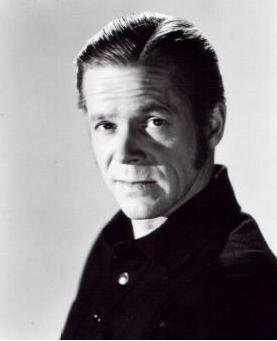
Johnny Stool Pigeon (1949) Howard Duff, Shelley Winters and Dan Duryea in a William Castle drug-smuggling drama. A competent script and good actors transcend Castle's slightly crude directorial technique. Shelley Winters is still pretty cute here, Duryea deserves a little more recognition as a reliable supporting actor, but Duff is stonefaced and not very appealing as a protagonist. A pretty good crime action drama. 6/10
Wednesday, December 29, 2010
Movies
It's a good thing I make notes on my desk blotter or I would forget all this holiday indulgence:


The Hayseeds (1933) An Australian romantic musical comedy, as it proudly proclaims on the title card, and it makes quite a thing out of being Australian too, with monologizing on the Australian national character, and random insertion of wildlife footage. The romantic duet spends as much time showing the Sydney harbor bridge as the young lovers. This is the first film appearance of South African born Cecil Kellaway, who later found quite a bit of work in Hollywood. The quaint, countrified Hayseeds spend some time chasing trollleys in the bustling streets of Sydney, which looks as vast and towering as Chicago. The plot and songs are adequate, and this is an interesting novelty that doesn't tire you overmuch. 5/10

Son of Ali Baba (1952) Tony Curtis is browned up for a glamor-boy turn in this cheesy costume potboiler. They couldn't drive an extra half hour to shoot the horse chase scenes in the desert, so this Bagdad is nestled amid rolling hills clad in sagebrush and scrub pine. Colorful filler, more fun than a bible movie. 3/10
Les Belles (1961) "Qian jiao bai mei" is the vernacular title of this Hong Kong romantic musical comedy from Shaw studios, focusing on the lives and loves of members of a modern dance troupe. It is notable mainly for the fact that it is presented in a very western style, with little distinctively Chinese culture intruding beyond a couple of historically themed dance numbers. I have become accustomed to the Hollywood treatment of the latin theme but it is jarring to see a latin dance number done with Chinese tonalities. It's clear they had little experience in staging western style dance numbers, which strive for exoticism but are rather flat and dull. Very brightly illuminated and colorful, with some peppy songs and bizarre dance settings, but rather long at two hours. Of interest mostly as an oddity and for cultural comparison. 5/10
Spiderweb number - in ShawScope. It's wide.

Sunset Murder Case (1938) Burlesque dancer Sally Rand stars in this poverty row B pic, and her bubble dance was the reason I watched it. It's pretty mild until the last moment, when she briefly, and heavily backlit, drops her filmy wrap to show her form. A fan dance number was apparently too revealing, so it's concealed behind palm frond silhouettes inserted over the frame, making me wonder if there might have been a "special" version of the film which lacked them. Otherwise it's another brief gunshots and gangsters story. 4/10
The famous Bubble Dance

Yes Sir, Mister Bones (1951) Hour-long cheapie about a retirement home where old Minstrels lurk, waiting for someone to come along and ask them what a "minstrel show" was. Does a fair job of conveying the spirit of the artform, if not the letter - the music is pretty swingified - with a couple of remarkable turns from Scatman Cruthers, some nostalgic Negro Spirituals, and some grating blackface "comedy." The black performers are uniformly superior, the blackfaces pretty hard to take. It does show the omnibus nature of the minstrel show, providing all varieties of entertainment in one grand spectacle, but a more realistic flavor can be gotten from 1952's Stephen Foster faux biopic I Dream of Jeanie, or Shirley Temple's 1936 film Dimples. Directed by Ron Ormond, and it's not the weirdest thing he did, not by a long shot. 5/10
Side note - Ron Ormond is perhaps least known for this contribution to popular culture - the line "christianity is stupid," from his christian commie-scare film If Footmen Tire You, What Will Horses Do, which was put to use by Negativland.
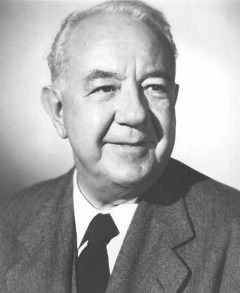
Forbidden (1953) An adequate exotic noir, placing Tony Curtis in a backlot Macau intrigue. Joanne Dru is the adequately angular and immaculate woman with a history. The story is convoluted without being indecipherable, the dialog is full of mild congenial phrases forced through gritted teeth, and it comes to an adequately active climax. The primary song in this universe is You Belong to Me (See the pyramids along the Nile etc.) and I suppose this is the film that made it popular - it's still rotating through my head today. It all looks good and stays interesting, but there is a wee bit too much standing around talking, and jumping into cars and dashing off somewhere for me to say it was great. Pretty good though. 7/10
I also watched quite a bit of Toomorrow (1970) - it seems the masterminds behind The Monkees wanted to do it again, this time with a movie in England. Extraterrestrial observers find that a pop band featuring Olivia Newton John is the only source for the healing vibrations they crave. Aimed at an older audience, with art-school protests and sit-ins a major plot element, it is peculiar without being interesting.
Japanese release. Also very wide.

Sunday, December 5, 2010
Movies
Search for Beauty (1934) Robert Armstrong, James Gleason and Gertrude Michael are two bit hustlers trying to make it big in the Health Racket; Buster Crabbe and Ida Lupino are the Olympic athletes they hire as a front, who queer the pitch by forcing them to play it straight. Lupino is here a bleached blonde with pencilled eyebrows and a bit of a British accent and it took me half an hour to figure out which one was her. Strangely, the movie does the same thing the hustlers want to do - sell cheesecake and beefcake under the guise of health and exercise. Lots of healthy young people in bathing suits leaping and stretching. I've never seen anything quite like it. Odd but not great. 5/10


Xica da Silva (1976) Brazilian costume fantasy very loosely inspired by the true story of the title character's rise from slavery to the pinnacle of wealth and power in colonial Brazil, as mistress of the controller of the nation's diamond mines. An extremely colorful story in every way, with fascinating costume, architecture, landscape and characters. Xica is vibrantly portrayed by the charismatic Zeze' Motta, who seems to have had an extensive career in Brazilian film and television. Maybe not strictly educational, as it varies widely from historic fact, but quite entertaining. 8/10
Zeze' Motta as slave...

...and as queen.

Saturday, August 28, 2010
Movies
De Noorderlingen (1992) Quirky Dutch film. Like many Quirky films there is a neutral character (in this case a child) who acts as observer of the peculiarities of an isolated community. In this case the community consists of one finished block of modern housing in the middle of nowhere, a fragment of a discontinued housing project. Bizarre, unfortunate and tragic events occur in strange circumstances and environments. Then it ends. If you like this sort of thing, this is the sort of thing you will like. Kept my interest. 5/10
The Hour-Glass Sanatorium (1973) Quirky Polish film. My friend Tim Maloney sent me this because it most adequately simulates a dream. I agree - it is the most perfectly dreamlike of any film I have yet seen. As such there was no need to try to follow what was happening, and I felt I could wake up at any time, so after about an hour and a half I did. I think you could put this on loop and not even notice. Good if you like this kind of movie. Didn't keep my interest but was intriguing to see. 5/10
Tuesday, August 24, 2010
Movies
Poligamy (2009) Hungarian romantic fantasy: an aspiring screenwriter who finds the prospect of parenthood and marriage with his long-time girlfriend oppressive, wakes up in a redecorated apartment with a strange woman, and he is the only one who notices anything different. This happens every day until he learns his lesson. I picked this because I like to try to see something relatively normal from other countries, and I thought it would be something Donna and I could watch together. What I always forget is that, being of a melancholic temperament, I choose things I think will make me feel better, while she - sanguine or choleric or whatever - prefers things that tend to make me feel worse; disturbing unsettling things with no clear resolution that just leave me wishing I had stayed in bed. So I thought this was cute and pleasant, a good window into an idealized daily life in modern Budapest; she seemed to think it was too light, and lacking in substance. Sometimes things are just for fun, to find some pleasure and enjoyment in life. 7/10
Thursday, July 8, 2010
Movies
Nancy Drew and the Hidden Staircase (1939) A bit more like an actual Nancy Drew story than the previous effort, but they really seem to be trying to "girl" her down for this, keeping her dressed way too young and giving a lot of the effective action to her chum Ted Nickerson. It seems like Bonita Granville was growing out of the role even as the film was shot. If you must see a Nancy Drew movie, see the first one, Nancy Drew, Detective. 5/10
Let George Do It! (1940) Because he plays the ukulele, George Formby is mistaken for a Nazi spy. Songs range from his standard music-hall folk style to a full-band swing number, and are all quite enjoyable and well-integrated into the film, not just plunked in at a slow spot. Good dream sequence in which he beats the hell out of Hitler must have been very satisfying to the viewing public at the time. The catch-phrase "It's that man again," appears repeatedly. Adequate entertainment. 6/10
Tuesday, July 6, 2010
Movies
The Public Cemetery Under the Moon (1967) This Korean melodrama of supernatural vengeance was of great socio-anthropological interest to me in its presentation of idealized settings and circumstances. A maidservant schemes to poison and replace her mistress, with most of the action taking place within the confines of a wealthy household during the Japanese occupation of Korea. It begins with a pleasantly hokey spook spectacle with the late wife rising out of her cloven grave mound to protect her infant son from the plotting poisoner, then tells the tale from the beginning, winding up with more lurid and rather violent and atrocious scare stuff in the end. All the women wear traditional attire throughout, and the sets seem rather intricately garish and overdecorated. It's not enough for the protagonist to be miserably poisoned, she is eventually driven to suicide by false accusations of adultury, and the scene of her last testament and suicide note being sung over her coffin, surrounded by weeping mourners, was fascinating and stirring. The production values are quite good but the scare technique is primitive, often relying on intercutting lurid random ghost shots with a series of terrified reactions. Run over here, and there's a blue-lit close-up of the ghost with blood-dripping fangs. Scream and run over there and cut to the ghost backlit in medium shot with her hair down and blowing. Et cetera. What appears to be a cultural tendency toward misery and suffering is shown strongly here with the middle section of the story a drawn out depiction of the victim's decline and compounded sufferings, and the husband is at one point tortured by the Japanese for no reason which contributes to the story. Very educational for me but not what I would call a whole lot of fun. 5/10

Traditional upper-class Korean setting and attire.

Nancy Drew, Trouble Shooter (1939) The third Nancy Drew film and a very poor one, a cynical cash-in quickie with a bad script. It takes almost half the movie for them to really get going on the mystery, working up to it with too much focus on the characters, resulting in a lot of sitcom and slapstick. Bonita Granville is cute and bright, and is set off in charming costumes with pleated skirts or loose draped slacks, and nice fedora-style hats. The film's most notable feature is a negative one - Willie Best's role as Apollo Johnson, a perfection of the stereotype of shiftless chicken-stealing childishly superstitious moronic Negro. I am accustomed to the standards of that day, and can be fairly tolerant of the universal depiction of any ethnic character through stereotypes, but this is a nadir point for African Americans which I found saddening and very hard to watch. I felt saddest for Mr. Best, for having done this terrible thing. I feel it might not have been too bad for this film to have been lost, but the best thing would have been for it not to have been made at all. 1/10
Thursday, June 17, 2010
Movies
Rongraem Narok [Country Hotel] (1957) Extremely long (2hr 18min) and slowly paced Thai film. It seems like the film version of a one set stage play - Paradise Hotel has one bedroom, occupied by an accountant who is there to pick up the payroll for a nearby factory. Its lobby is also a rehearsal space for local musical groups who drop in and play a song every once in a while. Then a pretty girl arrives, followed by bandits, and there is conflict. It took me days to get through this because everyone likes to think for about five seconds before they say their lines, and the pacing is absolutely deadly. Slightly educational without being very entertaining. 4/10
Holiday on the Buses (1973) Third and last of the On the Buses movies - main characters all lose their jobs with the bus company and find new ones at a Holiday Camp, which is what made this of interest to me. British holiday camps are a mass vacation experience with excursions, entertainment, swimming, dances etc. like what you would get on a cruise ship only more like a huge motel behind iron gates - a kind of Auschwitz of fun. I don't suppose they are nowadays what they once were. They are also a bit of a secret outside of their island home and therefore interesting to me. Otherwise it's just a mess of comedic situations. It seems that the protagonist must suffer some form of genital torture in each of the films as he tries and fails to have sex with beautiful women who somehow find him extremely attractive. In this one he gets his groin shocked by an electric fence and has his ass boiled in a soup kettle and then fried on a griddle of eggs. I'm glad I don't have to watch more of these. 4/10 for educational value.
This purports to be the Complete Guide to British Holiday Camps.

Tuesday, June 15, 2010
Movies

Yokai Monsters: Spook Warfare (1968) Ancient Babylonian demon awakens and goes to Japan where he faces off against the legions of Japanese Apparitions. It's a monster suit movie, with the monsters being traditional grotesque spooks; the protagonist is a Kappa, or water imp, who calls upon creatures like the one-legged cyclops umbrella with the huge licking tongue (actually a big marionette) the beautiful girl with a hideous face on the back of her head, dwarf with giant stone head, squeaking mushroom blob, snake neck woman, etc. Completely nuts except for the incredibly tedious human plot elements in between the monster suit fight scenes. There is a definite nationalist angle in this as in much of Japanese culture, with emphasis placed on the supremacy of the Japanese Apparitions over the foreign invader. First of three such Yokai Monsters films. 6/10
Lake of the Dead (1958) Norwegian psychological thriller that plays with levels of reality in a weird way. A writer reads to his wife from the manuscript of his new novel about a group of people staying at a cabin by a lake said to be haunted by the ghost of a one-legged axe murderer - one night a year you can hear his screams and that is just three nights away. They find and read aloud from a dream journal, and there is uncertainty about whose dreams they are. Hypnosis and telepathic dream-sharing are also involved. What really threw me was that I kept remembering it was just a guy reading a story to his wife, and they never resolve that at the end. Kind of talky, but it's filmed with a sort of cautious staging that makes it seem more fantasy than reality. Really more like a 1940s American b-movie with a more precise presentation. I can't tell if they meant it to be as much of a proto-ironic exercise as it appears. Kind of long to sit through. 4/10
On the Buses (1971) Movie cash-in based on hugely popular British sit-com about bus drivers. Crude low humor throughout, with lewd innuendo, snide cruel asides, and juvenile pranks. It's really an extension of schoolboy humor with the lads standing around cackling over the absurd predicament they've gotten their inspector into, scheming up pranks and drooling over cleavage. The situation in this case is that female bus drivers have been introduced, leading to various other situations occurring. This is an anthropological exercise for me - I see how certain types would find this amusing but it is pretty dreadful to a thinking person. British comedies of this sort have a far stronger anti-authoritarian and class-conflict angle to them than their U.S. counterparts, there is no effort made to heal the rift and strive for co-operation which would be the lesson here. The closest American sitcom to this is Hogan's Heroes - the authority figures are the enemy to be fooled and humiliated. I have two more of them to watch, having rashly downloaded the set. 3/10
Thursday, June 3, 2010
Movies
The Punch and Judy Man (1963) Written by and starring British comic actor Tony Hancock, this is a mild comedy of class conflict in a seaside resort town. Social-climbing wife promises the protagonist will perform his Punch and Judy show at a Gala Affair - he is an anti-snob who mocks and despises the upper classes, and they respond to his needling with hatred. In the egalitarian U.S.A. such a story from this period might end with some degree of mutual understanding, but in Merrie England the message from start to finish is know your place and keep it. The posh crowd takes a real drubbing in this and comes off as a lot of hateful fools who deserve to be despised. The ever-present John Le Mesurier has a significant role as a sand sculptor who lectures on the death of Lord Nelson. My reason for viewing this was my interest in folk entertainments but I learned an interesting lesson on British class culture too. 6/10
Monday, May 24, 2010
Movies
Mister 880 (1950) Thank you, Donna, for reminding me that I had not written this up. Just about the most heartwarming story of crime and counterfeiting you will ever see. Based on a true story, about an old man in New York City who supplemented his income by passing one or two crudely designed counterfeit one dollar bills every day. His systematic and offbeat approach kept him from being captured for some ten years. I had been wanting to see this for quite a while, having read of it in one of the many compendia of crimes, rogues and scoundrels on the shelves here at the Kooks Museum. Young, wavy-haired Burt Lancaster won't give in until he captures lovable kindly Edmund Gwenn. Dorothy McGuire plays The Girl but for some reason she has always passed instantly from my memory. You can have Miracle on 34th Street, this is better and you don't have to wait until December to watch it. All-around good fun for everyone. 10/10
Wednesday, May 5, 2010
Movies
I've Got Your Number (1934) Joan Blondell in telephone-related activities. Pat O'Brien is the obnoxious jerk who won't give up until he saves her from the gangsters and wins her "hand." Allen Jenkins and Eugene Pallette support. Good opening montage, interesting to see the entirely mechanical workings of the telephone system with banks of clicking relays. Nothing really outstanding except the unbelievably cute Blondell. I'd watch anything with her in it from this period. 6/10


Sunday, April 25, 2010
Recent Viewing
A Matter of Life and Death (1946) David Niven should have died when he jumped out of a burning airplane without a parachute, but he didn't and they have to figure out what to do about it. I love any cinematic depiction of heaven, and this has some of the most wonderful heaven scenes ever filmed. On the other hand I am not too thrilled about trial scenes, which are just people standing around talking, but this trial takes place in heaven and is one of the most spectacular courtrooms ever depicted. I had been wanting to see this for years, after having seen a photo of the gigantic escalator they ride on to and from heaven. They were obviously working out some mixed feelings about Americans with this, after their wartime experiences, and it's always interesting to me to see how they are depicted from another cultural viewpoint. Entertaining overall, few surprises, much satisfaction. 8/10
Village of the Damned (1960) Mysterious force causes village women to become pregnant with strange threatening children. We always enjoy Monster Child movies, and this is one of the best. Demonizes not only children but conformity and mind control and, by allegory, nationalism. George Sanders is always a plus. 8/10
Those two were watched with Donna. Alone I watched:
Supertrain: Express to Terror (1979) Pilot/premiere of the short-lived and disastrous television program about a gigantic atomic-powered luxury train with disco, weight room, swimming pool and sauna. Hugely expensive models and sets filled with third-string actors who were apparently told to overact every single line. I have absolutely no memory of this program's existence. I may not have owned a TV at that time. Crooner Steve Lawrence is the star, and it seems anyone who could be spared from a guest spot on the Carol Burnett show was shoehorned in. A fascinating historical document. 6/10 for schlock value. Anything you ever need to know about Supertrain can be learned from this excellent website:
Subscribe to:
Posts (Atom)